A portfolio is a highlight reel, and highlight reels are edited by the person who wants the job. That is not dishonest. It just means the 12 best projects a designer ever touched tell you very little about the 13th, which is the one they will do for you. Learning how to evaluate a designer portfolio properly is the difference between hiring someone who can show good work and someone who can repeat it.
This guide gives you a practical checklist, a simple scoring rubric and role-specific test tasks you can use from next Monday.
Why Skills-Based Hiring Beats the Gut Feel Scroll
Most hiring managers spend under two minutes on a portfolio. In that time, the eye goes straight to colour, polish and big brand logos. None of those reliably predict performance on your briefs.
Skills-based hiring flips the order. Instead of asking “do I like this?”, you ask “which specific skills does this prove, and which does it only suggest?” Degrees, years of experience and agency names become supporting evidence rather than the headline. It also widens your talent pool, because a self-taught designer from a tier 2 city gets judged on the same output as someone from a famous studio.
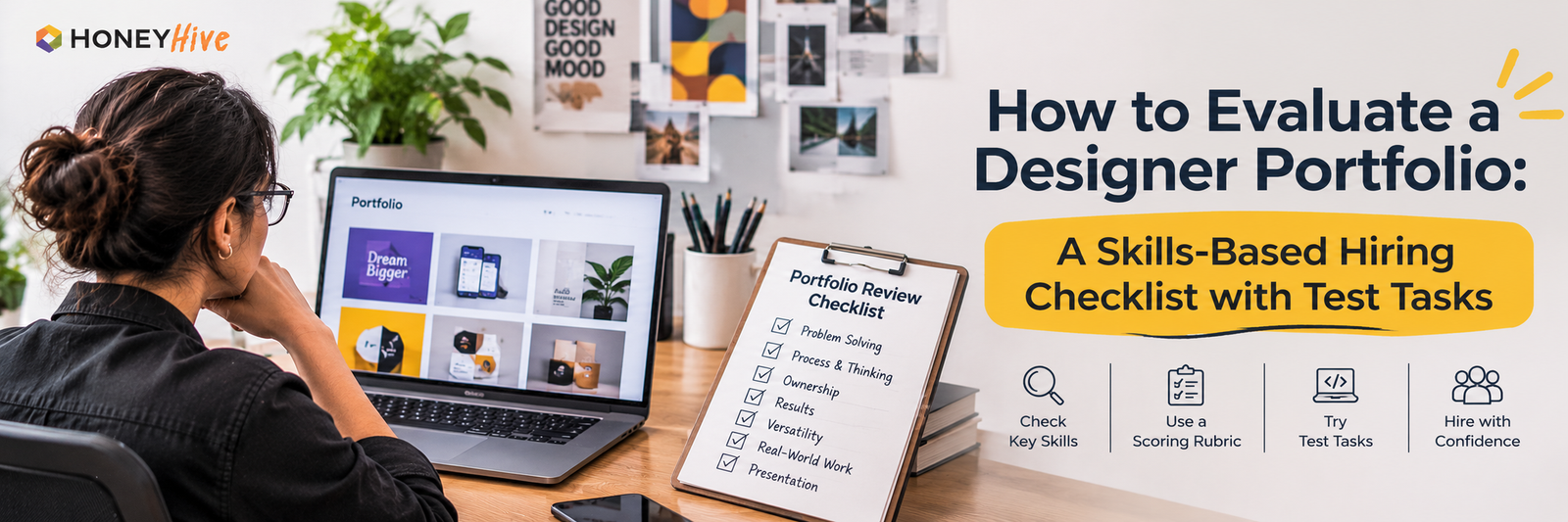
The Designer Portfolio Review Checklist
Use these seven checks for every designer portfolio review. Score each from 1 to 5 and you will have a comparable number for every candidate on the shortlist.
1. Problem Before Pixels
Does each case study open with the business problem? Look for a goal, a target audience and a constraint such as budget, timeline or legacy branding. Designers who explain the “why” usually think like partners, not order takers.
2. Visible Process
Sketches, rejected concepts, wireframes and moodboards matter more than the final mockup. A portfolio with only finished hero shots hides the thinking you are actually paying for. If process is missing, ask the candidate to open the working file of one project on a video call. Layer names, artboard order and discarded versions tell an honest story in about five minutes.
3. Clear Ownership
Group projects are normal. Vague credit is not. Strong candidates state exactly what they did: “I designed the packaging system; the illustrations were by our in-house artist.” If you cannot tell who made what, ask. A follow-up question such as “what would you change if you did it again?” also separates real owners from bystanders very quickly.
4. Outcomes and Evidence
Did the redesign lift click-through rates, cut support tickets or win a pitch? Not every project has metrics, but a mature designer will at least describe what happened after launch.
5. Range Within a Consistent Standard
Range does not mean ten different styles. It means the designer can adapt tone for a fintech app, a D2C skincare brand and a B2B brochure while keeping typography, hierarchy and spacing equally sharp across all three.
6. Real World Constraints
Spec work and concept redesigns of famous apps are fine for juniors. For mid-level and senior roles, look for shipped work that survived client feedback, accessibility standards, print specifications or platform guidelines.
7. Curation and Presentation
The portfolio itself is a design project. Six well-explained pieces beat 30 thumbnails. Fast load times, readable captions and a logical sequence all signal judgement.
Creative Hiring Test Task Ideas by Role
Even the best portfolio is a record of the past. A short, paid creative hiring test task shows you how a candidate works today, on your kind of problem. Keep it under three hours, pay a fair fee, and never ask for work you will actually use.
Graphic Designer
Share a fictional brand brief with a logo, two colours and a tone of voice. Ask for one Instagram carousel and one print flyer. You are checking hierarchy, adaptation across formats and attention to brand rules.
UI/UX Designer
Give a screenshot of a clunky checkout or signup flow. Ask them to identify three usability problems and redesign one screen. Request a short note explaining their reasoning. The note often reveals more than the mockup.
Video Editor
Provide 10 minutes of raw footage and a 45 second target length for social media. Look at pacing, story structure, audio levels and how they handle the first three seconds, which decide whether anyone keeps watching.
Motion Designer
Supply a static logo and ask for a five second animated sting. You will quickly see their sense of timing, easing and restraint.
Brief the Task Like a Real Client
Include a deadline, one round of feedback and a stakeholder comment that slightly contradicts the brief. How a candidate responds to that friction tells you how they will handle your actual marketing team.
A Simple Scoring Rubric
Combine the portfolio score with the test task score using weights that match the role:
| Criteria | Weight |
| Portfolio checklist (seven checks) | 40% |
| Test task quality | 35% |
| Response to feedback | 15% |
| Communication and presentation | 10% |
Ask two reviewers to score independently before discussing. This reduces the halo effect, where one impressive project inflates everything else.
Mistakes That Quietly Ruin Portfolio Reviews
- Hiring your own taste. Judge fit with your brand, not personal preference.
- Overvaluing famous logos. A big client name may mean a tiny contribution.
- Unpaid or oversized tasks. Good designers will politely walk away.
- Skipping the debrief. Always ask the candidate to talk through their test task for 15 minutes.
About HoneyHive
HoneyHive is a Bengaluru-based creative staffing agency that places vetted graphic designers, UI/UX designers, video editors, motion designers and copywriters with growing brands. Every candidate is screened on real skills before you meet them, and talent stays on HoneyHive’s payroll, so you can scale your creative team without long hiring cycles. HoneyHive can even set up a complete creative studio at your office.
Your Next Hire Is Already Out There
Somewhere, a designer is polishing a case study that will land on your desk next week. With this checklist in hand, you will see past the gloss and spot the person who can actually solve your problems. Rather skip the shortlisting marathon altogether? Visit HoneyHive and meet pre-vetted creative talent who have already passed the test, so your next great campaign starts sooner.
Frequently Asked Questions
1. How long should a designer portfolio review take?
Allow 15 to 20 minutes per shortlisted portfolio. Score it against the seven-point checklist during the review rather than afterwards, while details are fresh.
2. Should a creative hiring test task be paid?
Yes. Paying a fair fee shows respect, attracts experienced candidates and makes it clear you will not use their work commercially.
3. What is skills based hiring for designers?
It means assessing candidates on demonstrated abilities such as layout, typography, problem solving and feedback handling, rather than relying mainly on degrees or job titles.
4. How many projects should a strong designer portfolio include?
Usually five to eight well-documented case studies. Quality, process and clear ownership matter far more than volume.
5. Can a staffing agency help with designer portfolio review?
Absolutely. Agencies like HoneyHive pre-screen portfolios and skills, so you spend interview time only on candidates who already meet your standard.